


I forgot my laptop. That hasn’t happened in 30+ years of work travels. I was helping get my kiddo out the door for school, then frantically packing for the airport, got to security and realized my laptop was at home on the couch where I had my morning coffee. There wasn’t time to go home and get it, so I boarded the flight.
My second flight was delayed, leaving a 2+ hour layover at LAX on the way to the Microsoft Ignite conference in San Francisco. I looked up the closest big-box store, hopped in a cab and went to get a new laptop. $700 later I had a shiny new MacBook Neo. Back at LAX with the laptop, I had about 10 minutes to get it set-up before I boarded.

First step, iCloud login. All my personal settings started coming down. Boarded the flight, and when I landed, I started the second step, Intune enrollment through the company portal. Then all my work life started trickling down.
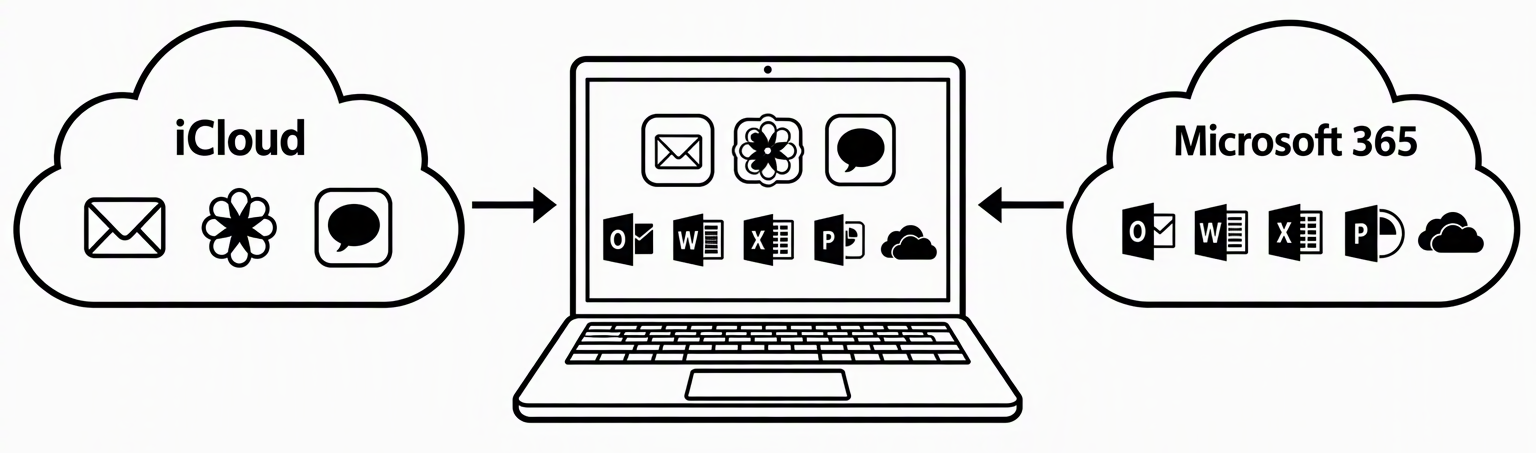
I’ve been thinking a lot about Business Continuity this week with all the outages in the news. I’m going to do a whole blog series but figured I’d start with the endpoint, since that is where the work is done. And if designed properly, losing the endpoint, or in my case forgetting it, doesn’t have to be a disaster.
At Syntax we live in the M365 stack. For anything legacy (file servers, client/server apps) we live in Azure Virtual Desktop. This is the dream I’ve been preaching about for years: disconnecting the applications and data from the endpoint to be truly resilient. With a combined 15 minutes of action, I was back online and could access my M365 apps from the web while the thick clients were automatically pushed via Intune. I could access AVD if I needed any legacy systems. With iCloud, all my personal data was there: contacts, messages, etc. Both of my worlds, personal and work, were ready on this new laptop so I could keep working while traveling for a week.
If you forgot your laptop, or something happened to it, how long would it take you to get back online? If the answer is more than 15 minutes, I’d be happy to talk through how to close that gap.
Stay tuned for future posts in my resiliency series. I’ll be working on the following topics:
- When Microsoft Goes Down: How to keep your team working through an M365 outage
- Protect What Matters: Which servers to protect, on premises or in Azure, and how
- Full Disaster Recovery: Set your RTO and RPO, then build to meet them
- Stay Connected: Firewall and network resiliency for your key business areas